
How Peter Walls Built a Career in Customer Success
My career has been far from linear. After graduating with a Spanish degree, I worked as an English language teacher in Madrid before relocating to London. Rather than follow traditional language routes, I reframed my degree as communication and found myself in an entry-level sales role. The next five years were a whirlwind across business intelligence, fast-moving consumer goods, financial services and supply chain logistics.
After five years in sales, I decided to pivot and was awarded a scholarship to pursue an MBA with distinction. During my final project, I consulted for a startup building their customer success function for the first time. This experience fascinated me; I researched the origins of Customer Success and wrote my thesis on how it differs from customer support and account management. I discovered CS combined everything I loved about sales while removing what I didn’t enjoy. I joined Braze and haven’t looked back since. Moving to Singapore fulfilled a long-held dream my wife and I shared. Professionally, Asian markets represent untapped growth opportunities, and I’m confident the regional experience will be a key differentiator for my career. Braze’s Asian-Pacific headquarters being here made it the natural choice.
There have been a few key milestones that cumulatively built on one another in a way that wasn’t obvious (and certainly wasn’t intentional) at the time. These wins included early sales wins building to new career opportunities; a wide range of industry knowledge complementing my MBA scholarship application; delivering the valedictorian speech at my graduation ceremony; securing an exciting role at an American scale-up, three days before IPO; countless contracts renewed, challenging client moments overcome and workshops delivered; securing a role in Singapore; and, finally, my move into Braze’s dedicated AI success team, which wouldn’t have been possible without the foundations set by the previous milestones.
What Does Braze Do?
Braze is a customer engagement platform that helps brands use real-time data and AI to create personalized experiences across channels such as email, SMS, mobile, web and in-app messaging. Its platform combines data activation, journey orchestration, cross-channel messaging and AI-powered decisioning to help companies strengthen customer relationships and drive engagement.


What Does an AI Success Manager Do at Braze?
There are striking similarities and key differences between an AI success manager and a traditional customer success manager. AI success management is fundamentally analytical. We must deeply understand the specific client objective or key performance indicator we’re optimizing, identify all levers to drive incremental value from the machine learning model, and navigate the inherent trade-offs in each decision. The core CSM operates as a generalist consultant, deploying a versatile product across diverse use cases and requirements. In the core role, team members each own their book of business with distinct priorities. Team benefit comes largely from sharing knowledge, processes and best practices.
AI success operates differently. We work alongside engagement managers and data scientists on each account, aligned toward a singular goal of maximizing client value. Our role is to quarterback this cross-functional team and coordinate with wider business teams to ensure we’re consistently driving toward that North Star. Both roles demand strong relationship management, presentation skills, technical and domain expertise, and data analysis. The key distinction lies in our depth of focus versus breadth of knowledge, and how we collaborate to deliver results.
What Does an AI Success Manager Do at Braze?
AI success managers at Braze work with engagement managers and data scientists to maximize customer value from machine learning models. The role involves understanding client objectives and KPIs, identifying ways to drive incremental value, navigating trade-offs and coordinating cross-functional teams toward a shared goal.
Unlike traditional customer success managers, who operate as generalist consultants across a range of use cases, AI success managers have a deeper analytical focus and work collaboratively on each account.
How Working at Braze Has Shaped Peter Walls’ Career
Coming out of my MBA, I was passionate, confident, knowledgeable and career-motivated in a way that I’d never been before. Whilst the course did have practical elements — consulting projects, case studies and such — it was largely theoretical. During my time at Braze, I’ve been honing the ability to layer reality onto the theory: People don’t always behave rationally and have conflicting interests and motives, so everything does not always go to plan. A much-needed skill I’ve developed in line with this is stakeholder management. If you’re managing a client, making a recommendation, building to a contract renewal or battling a complex technical escalation, you will deal with a broad range of internal and external stakeholders — technical to commercial and C-suite to entry-level. Success within these settings depends on understanding these stakeholders — their priorities, competencies and weaknesses — and structuring conversations around those themes. If they don’t understand how this contributes toward their role, they have little motivation to do what you’re asking of them.
How Braze Supports Career Growth
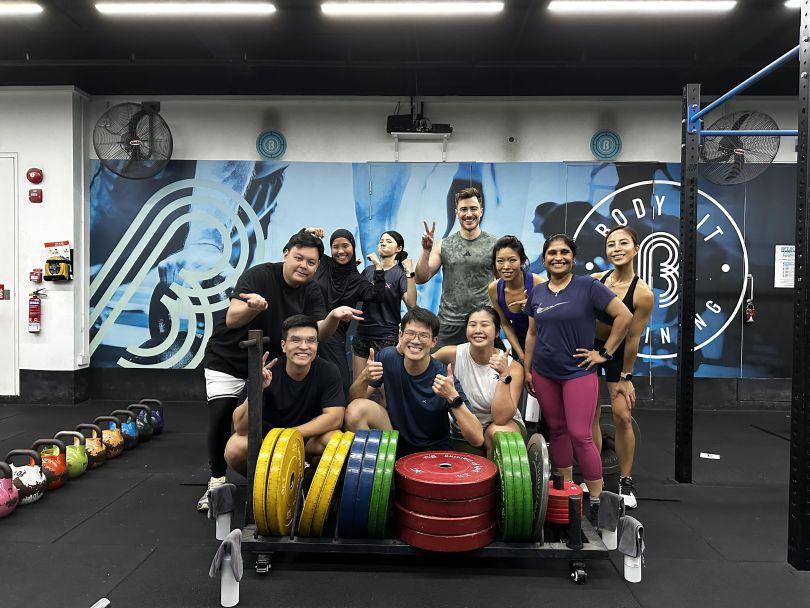
In addition to my friends and family, I’m grateful for the support and confidence shown by my friends, peers and leaders at Braze. I’ve been working at Braze for over four years — it now makes up nearly half of my career — and I have no intention of leaving any time soon. It’s a well-known adage that employees don’t leave poor companies; they leave poor leaders, and I feel incredibly fortunate to have found a team and a business that proactively encourage employees to take ownership over their professional growth. I’ve been supported in that I’ve never heard “No,” just “How about this?” or “Love that — let’s think about how to get you there.”
Growth at Braze takes many forms within our roles and domains, as we’re challenged day to day: linear growth via performance reviews and promotions, and non-linear growth. The non-linear growth is the area I find most interesting, as it’s entirely personal. Considering only the internal growth within customer success, I’ve seen team members moving into a range of roles. In summary, whilst there are “typical” growth trajectories, I’d say the most exciting ones are atypical, and would encourage anyone who likes the sound of that to come and join us.
Frequently Asked Questions
What is an AI success manager at Braze?
An AI success manager at Braze works alongside engagement managers and data scientists on customer accounts to maximize client value from machine learning models. The role acts as a "quarterback" for cross-functional teams, coordinating with wider business teams to navigate trade-offs, identify levers for incremental value and ensure everyone is aligned toward the specific client objective or key performance indicator.
How does AI success differ from traditional customer success?
AI success management has a deeper, highly analytical focus centered around machine learning models, whereas traditional customer success managers operate as generalist consultants deploying a versatile product across diverse use cases. Core CSMs each own their own distinct book of business and priorities, benefiting from sharing knowledge and best practices. In contrast, AI success managers collaborate with data scientists and engagement managers and maintain alignment around a singular goal for each account.
What skills are required for an AI success manager?
An AI success manager requires a mix of technical and interpersonal skills, including strong analytical skills to deeply understand specific client objectives/KPIs and identify levers to optimize machine learning models. It also requires strong relationship management to coordinate across business units and the ability to navigate internal/external stakeholders across all levels — entry-level to C-suite — by understanding their motives, competencies and priorities.