


The Site Reliability Engineer - Incident Response role focuses on enhancing incident management, troubleshooting issues, improving response processes, and collaborating with teams to optimize reliability.
The Site Reliability Engineer - Incident Response is a critical enterprise-level role responsible for accelerating incident resolution and enhancing the overall incident management process. This individual partners with engineering teams during active incidents to troubleshoot issues using monitoring and logging tools, and post-incident, delivers executive-level summaries that clearly communicate impact, root cause, and resolution. The SRE - Incident Response also plays a key role in analyzing incident response effectiveness and identifying opportunities for systemic improvements.
Core Competencies and Qualifications:
Here are the responsibilities of this role when not tied to active on-call:
Post-Incident Review Development
Incident Process Improvement
Metrics and Insights
Tooling & AI Solutions
Cross-Team Collaboration
USD 99,000.00 - 165,000.00 per year
Compensation:
Compensation includes a base salary of $99,000.00 - $165,000.00. The base salary may vary within the anticipated base pay range based on factors such as the ultimate location of the position and the selected candidate's knowledge, skills, and abilities. Position may be eligible for additional compensation that may include an incentive program.
Benefits:
The Company offers eligible employees the flexibility to take as much vacation with pay as they deem consistent with their duties, the company's needs, and its obligations; seven paid holidays throughout the calendar year; and up to 160 hours of paid wellness annually for their own wellness or that of family members. Employees are also eligible for additional paid time off in the form of bereavement leave, time off to vote, jury duty leave, volunteer time off, military leave, and parental leave.
Core Competencies and Qualifications:
- Bachelor's degree in a related discipline and 4 years' experience in a related field. The right candidate could also have a different combination, such as a master's degree and 2 years' experience; a Ph.D. and up to 1 year of experience; or 16 years' experience in a related field.
- Applicants must currently be authorized to work in the United States for any employer without current or future sponsorship. No OPT, CPT, STEM/OPT or visa sponsorship now or in future.
- Engineering/Tooling: Demonstrates the ability to design, build, and maintain engineering solutions and tools that enhance reliability, automate incident response, and reduce operational toil.
- Incident Troubleshooting: Skilled in interpreting logs, metrics, and traces to assist in identifying root causes during live incidents.
- Monitoring & Observability: Proficient in tools such as Datadog, Splunk, New Relic, or similar platforms.
- Strong programming background in Python, Java, or C#, with experience building, maintaining, and troubleshooting production-grade services and automation tools.
- Proven ability to design and implement reliable, scalable, and highly available systems, leveraging software engineering best practices to improve system resilience and operational efficiency.
- Experience developing automation and tooling to reduce toil, improve incident response, and support continuous improvement across monitoring, deployment, and recovery processes.
- Ability to collaborate closely with software engineering teams to influence architecture and operational readiness, ensuring reliability is built into the system from design through production.
- AI Centric Engineering: Effectively leverages artificial intelligence (AI) and machine learning (ML) tools to automate, optimize, and enhance daily engineering and incident response tasks.
- Analytical Rigor: Strong attention to detail in validating incident data and identifying trends or gaps in response.
- DevOps & Architecture Knowledge: Understanding full-stack systems, CI/CD pipelines, caching, scaling, and cloud-native infrastructure.
- Metrics & Reporting: Capable of calculating and interpreting key metrics like MTTA (Mean Time to Acknowledge) and MTTR (Mean Time to Resolve).
Here are the responsibilities of this role when not tied to active on-call:
Post-Incident Review Development
- Draft and deliver executive summaries post-incident
- Develop and coach teams on blameless postmortems.
- Create templates, train facilitators, and help guide root cause analysis (e.g., 5 Whys, fishbone diagrams).
- Maintain a central library of learnings and cross-cutting themes.
Incident Process Improvement
- Actively support engineering teams during incidents by helping diagnose and resolve issues quickly
- Navigate and analyze data from observability platforms to make informed inferences about root causes
- Analyze the effectiveness of incident response to identify systemic reliability gaps.
- Standardize incident response workflows (incident roles, comms, escalation paths).
- Create or refine runbooks, incident command frameworks, and severity classification guides.
Metrics and Insights
- Build dashboards around incident frequency, MTTR, MTTA, and recurrence rates.
- Use incident data to drive reliability of OKRs or engineering investments.
Tooling & AI Solutions
- Partner with engineering teams to identify repetitive or high-impact tasks suitable for automation.
- Develop, implement, and continuously improve custom scripts, bots, and AI-driven workflows for monitoring, alerting, and incident triage.
- Evaluate and integrate emerging AI/ML technologies to optimize detection, root cause analysis, and reporting.
- Ensure all tools and automations are secure, maintainable, and aligned with organizational standards and SRE best practices.
- Document and socialize new tools and AI solutions, enabling adoption and knowledge sharing across teams.
Cross-Team Collaboration
- Collaborate with Engineering Managers and Incident Commanders to gather and validate incident data
- Partner with product teams, infra, and leadership to socialize reliability best practices.
- Act as a reliability "consultant" to squads that have impactful incidents.
- Recommend enhancements to monitoring, alerting, and response processes to reduce future incident impact
USD 99,000.00 - 165,000.00 per year
Compensation:
Compensation includes a base salary of $99,000.00 - $165,000.00. The base salary may vary within the anticipated base pay range based on factors such as the ultimate location of the position and the selected candidate's knowledge, skills, and abilities. Position may be eligible for additional compensation that may include an incentive program.
Benefits:
The Company offers eligible employees the flexibility to take as much vacation with pay as they deem consistent with their duties, the company's needs, and its obligations; seven paid holidays throughout the calendar year; and up to 160 hours of paid wellness annually for their own wellness or that of family members. Employees are also eligible for additional paid time off in the form of bereavement leave, time off to vote, jury duty leave, volunteer time off, military leave, and parental leave.
Top Skills
AI
Ci/Cd
Datadog
Machine Learning
New Relic
Splunk
Cox Enterprises Austin, Texas, USA Office


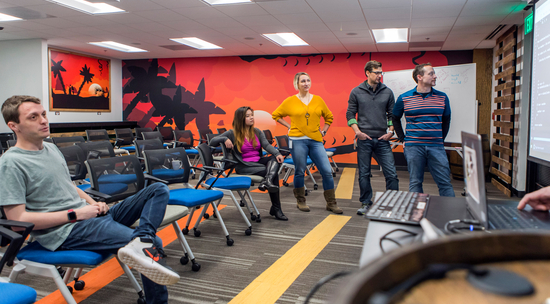
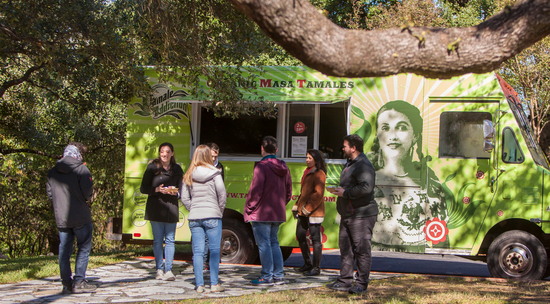



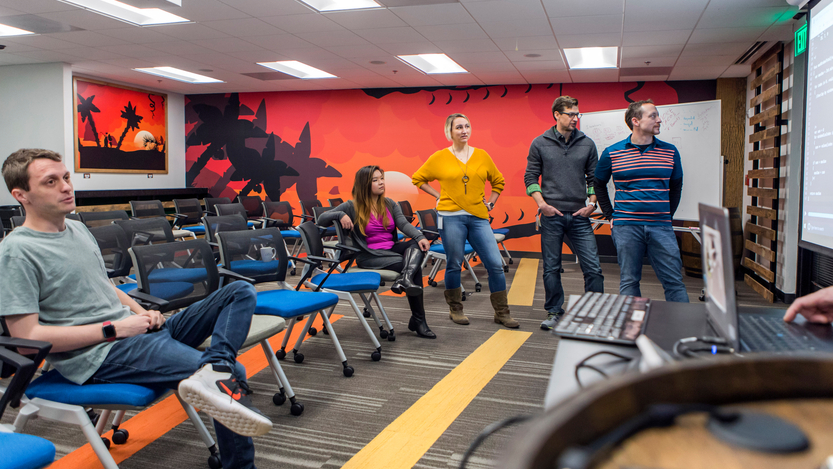
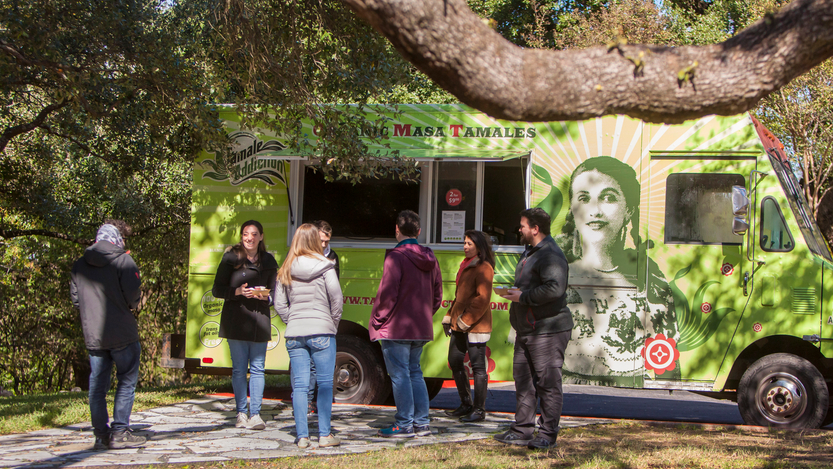

Austin is one of the top tech hubs in the US, and we’re proud to offer rewarding careers to eclectic folks who call Texas home. When you’re not building a better future with us in Austin, you’ll have easy access to live music, amazing restaurants, and outdoor activities. And tacos.
Similar Jobs at Cox Enterprises
Automotive • Cloud • Greentech • Information Technology • Other • Software • Cybersecurity
The Regional Sales Manager will sell network solutions to convention vertical clients, manage leads, close sales, and maintain client relationships while collaborating with internal teams.
Top Skills:
CRMLanNetwork SolutionsWi-Fi
Automotive • Cloud • Greentech • Information Technology • Other • Software • Cybersecurity
The Account Manager at RapidScale oversees customer relationships and satisfaction, drives revenue growth through upselling, and collaborates with internal teams. Responsibilities include managing renewals, executing strategic account plans, and providing customer insights for service optimization.
Top Skills:
Cloud ComputingDaasDraasIaasNetworkingSalesforceSecurity
Automotive • Cloud • Greentech • Information Technology • Other • Software • Cybersecurity
The Account Executive II drives sales of Hybrid Cloud Managed Services and Professional Services, managing customer accounts and developing new pipelines in a consultative manner.
Top Skills:
AWSAzureGCPSalesforce
What you need to know about the Austin Tech Scene
Austin has a diverse and thriving tech ecosystem thanks to home-grown companies like Dell and major campuses for IBM, AMD and Apple. The state’s flagship university, the University of Texas at Austin, is known for its engineering school, and the city is known for its annual South by Southwest tech and media conference. Austin’s tech scene spans many verticals, but it’s particularly known for hardware, including semiconductors, as well as AI, biotechnology and cloud computing. And its food and music scene, low taxes and favorable climate has made the city a destination for tech workers from across the country.
Key Facts About Austin Tech
- Number of Tech Workers: 180,500; 13.7% of overall workforce (2024 CompTIA survey)
- Major Tech Employers: Dell, IBM, AMD, Apple, Alphabet
- Key Industries: Artificial intelligence, hardware, cloud computing, software, healthtech
- Funding Landscape: $4.5 billion in VC funding in 2024 (Pitchbook)
- Notable Investors: Live Oak Ventures, Austin Ventures, Hinge Capital, Gigafund, KdT Ventures, Next Coast Ventures, Silverton Partners
- Research Centers and Universities: University of Texas, Southwestern University, Texas State University, Center for Complex Quantum Systems, Oden Institute for Computational Engineering and Sciences, Texas Advanced Computing Center
